Iran threatened on Wednesday to shut off more regional energy exports, after the U.S. reimposed a naval blockade of Iranian ports and both sides launched more strikes as they vie for control of the Strait of Hormuz.
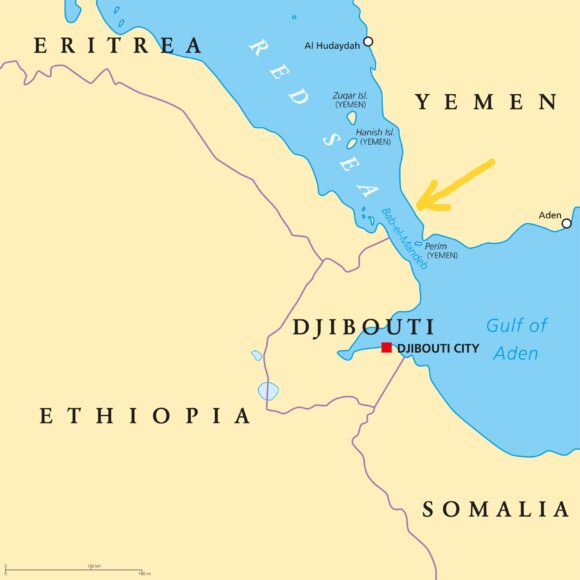
The apparent threat to shipping through Bab el-Mandeb, a gateway to the Red Sea, follows an escalation between Iran and the U.S. since last week that has severely frayed a tentative truce signed in June.
The war, which began with U.S. and Israeli strikes against Iran on February 28, triggered Iranian attacks on Gulf states that host U.S. bases and caused major disruption to global energy supplies, raising fears of a surge in inflation.
Iran’s Islamic Revolutionary Guard Corps said on Wednesday it had struck U.S. military sites, including in Bahrain, Kuwait and Jordan, after “U.S.’ treacherous military dispatched its naval pirates to the Indian Ocean, ostensibly to control the Strait of Hormuz.”
The U.S. “must brace for the closure of all other export corridors that benefit the U.S. and its allies,” the IRGC said. “Regional energy exports are either shared by all, or denied to all.”
The U.S. military said late on Tuesday that it hit dozens of military targets near the Strait of Hormuz and Iranian coastal areas in a wave of strikes lasting seven hours.
The strikes, which the U.S. military said had resumed on Wednesday, aimed “to continue degrading Iranian capabilities used to attack commercial shipping in the Strait of Hormuz.”
The United States said Iran had attacked seven commercial ships over the last week, leading to nearly a dozen crew members being killed, missing or injured.
‘End of America’s Evils’
Analysts say that while the U.S. and Iran have gone back to sparring as they did before the interim ceasefire deal was signed nearly a month ago, they are unlikely to return to full-scale war, though a risk of further escalation remains.
They say Iran is signaling it may use its Houthi allies in Yemen to shut Bab el-Mandeb, opening a new front against Washington and putting two of the world’s most vital energy arteries at risk.
As a result of the war, Iran has been trying to assert permanent control over shipping in the Strait of Hormuz and to impose fees on vessels passing through it, in what would be a major shift of the balance of power in a region where the U.S. has long acted as guarantor of security.
The IRGC said on Wednesday that the Strait of Hormuz would remain closed until what it described as “the end of America’s evils.” Before the war began in February, about a fifth of global oil and gas shipments passed through Hormuz each day.
Shipping data showed an uptick in Iran-linked ships passing through the strait before a new U.S. blockade on Iranian ports took effect.
Bab el-Mandeb links the Red Sea to the Gulf of Aden, through which Saudi oil exports and a substantial share of global shipping pass.
A senior Houthi official warned on Monday that the group was prepared to close the waterway — a move he said could send oil prices soaring to $200 a barrel — if Saudi Arabia continued to attack Yemen, according to a report from Iran’s Press TV.
Houthi forces fired missiles at Saudi Arabia after accusing the kingdom of bombing an airport under their control on Monday.
Oil prices extended gains by about 1% on Wednesday, after settling on Tuesday on a new one-month high.
Trump Threatens to Hit Energy Targets
Last month’s interim ceasefire deal was meant to lead to further negotiations, including on Iran’s nuclear program, and to a permanent truce, but a return to talks has faltered.
U.S. President Donald Trump, who faces domestic pressure to avoid a full return to war, on Tuesday threatened to hit Iranian power plants and bridges next week unless Tehran resumes negotiations.
“I’ll save the energy targets for last, but ultimately we’ll hit energy targets,” Trump said.
U.S. negotiators had been in touch with their Iranian counterparts to tell them “you better make a deal,” Trump added.
As tensions escalated, Trump on Monday floated the idea of a 20% fee on shipping through the strait. On Tuesday, he scrapped the idea and said, without providing details, that he would instead seek investment deals with Gulf states.
The war has killed thousands of people and displaced millions, mainly in Iran and in Lebanon, where conflict was reignited between Israel and Iran-backed militant group Hezbollah.
Iranian government spokesperson Fatemeh Mohajerani said at least 30 civilians had been killed in recent days due to the U.S. strikes on southern Iran, state media reported on Wednesday.
Iran’s army said at least seven active-duty and conscript personnel were killed in overnight U.S. strikes on the Bampur military base in the country’s southeast.
(Additional reporting by Reuters bureaus; writing by Michael Perry and Aidan Lewis; editing by Raju Gopalakrishnan, Kate Mayberry, Alexandra Hudson)