Key Takeaways
- AI visibility and AI profitability are not the same thing. Most teams are growing one without building the other.
- The four most common failure modes are optimizing for mentions over conversions, measuring AI visibility like rankings, chasing tactics without a revenue connection, and running AEO/GEO in a silo.
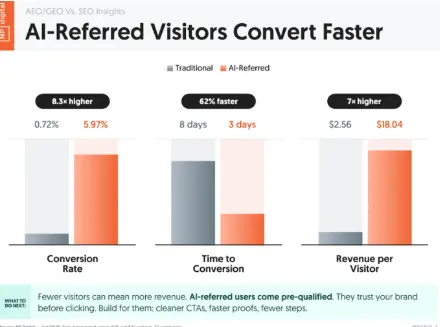
- AI-referred visitors convert at 8.3 times the rate of traditional traffic, close 62 percent faster, and generate 7 times more revenue per visitor. Those numbers only hold if your conversion architecture is built to receive them.
- The highest-performing campaigns share four traits: retrieval-ready content, strong authority signals, multi-channel distribution, and conversion systems designed for low-click environments.
- You can start building toward profitability in 90 days without a full overhaul, but the phases have to run in order.
You might be showing up in ChatGPT answers. Getting cited in Google’s AI Overviews. Watching your brand mentions climb across the web.
And still not seeing it move the revenue needle.
That’s the problem a lot of marketing teams are grappling with right now. AI visibility is growing. Profitability isn’t keeping pace. After analyzing more than 100 AEO and GEO campaigns at NP Digital, I can tell you the issue isn’t the strategy itself. Most teams are simply optimizing for the wrong outcomes.
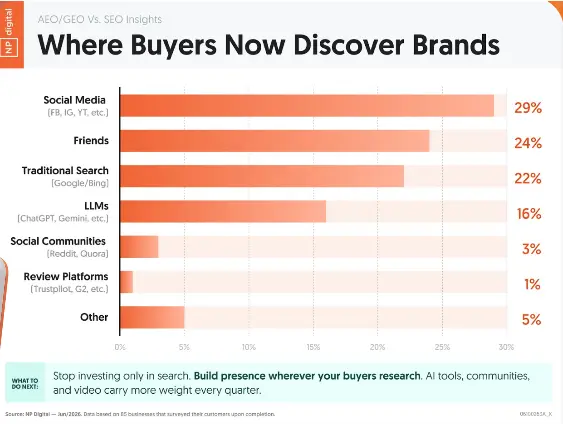
If you already know what AEO and GEO are and you’re ready to actually make money from them, this post is for you. I’m going to break down exactly where the profitability gap comes from, what the winning campaigns have in common, and how to build toward revenue, not just visibility.
Why Most AEO/GEO Efforts Don’t Make Money
Getting cited is not the same as getting paid. That distinction sounds obvious, but most AEO/GEO programs are structured around the former and hope the latter follows automatically. It doesn’t.
After auditing campaigns across industries, NP Digital identified four failure modes that consistently prevent AI visibility from converting into revenue.
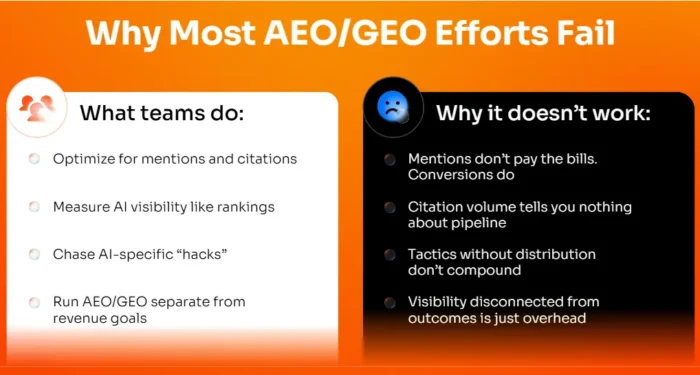
Optimizing for mentions and citations. Mentions don’t pay the bills; conversions do. If your entire AEO/GEO program is oriented around getting named in AI responses, you’re measuring a proxy, not an outcome. A citation that doesn’t connect to a conversion path is brand awareness you can’t prove.
Measuring AI visibility like rankings. Citation volume tells you nothing about pipeline. Teams that treat AI mention counts the same way they used to track keyword rankings end up with
dashboards full of activity metrics and no way to show leadership what any of it is worth.
Chasing AI-specific tactics in isolation. Schema updates, prompt engineering, entity optimization do matter, but tactics without distribution don’t compound. Teams that bolt on AEO/GEO tactics without building content and authority infrastructure underneath them tend to see short-term citation spikes that fade quickly.
Running AEO/GEO separately from revenue goals. This is the biggest one. Visibility disconnected from business outcomes is overhead. The teams getting budget approved for AI search have tied it to pipeline, not impressions.
NP Digital data tells the story clearly. AI visibility index climbed to 133 across tracked brands, while the profitability outcomes index reached 174. The gap between those two numbers is the opportunity this post addresses.
The Profitability Gap: What Changes When Buyers Use AI
Buyers who find you through AI tools are not the same as buyers who find you through traditional search. They arrive differently, they behave differently, and they convert differently.
The traditional funnel started with discovery through search, a click-through to compare options, an early-stage arrival that needed nurturing, and multiple touchpoints before a decision. The AI-influenced funnel runs differently. Research happens inside AI tools. Buyers validate brands before they ever click. They arrive later, already informed, and convert faster when trust exists.
That shift is an advantage, but only if your conversion architecture is built to receive it.
NP Digital data across 40-plus B2B and B2C campaigns makes the opportunity concrete. AI-referred visitors convert at 5.97 percent. Traditional traffic converts at 0.72 percent. Time to conversion drops from eight days to three. Revenue per visitor rises from $2.56 to $18.04.
The volume is still small. AI traffic accounts for about 0.58 percent of total traffic but drives 5.09 percent of sales. Lifetime value is also stronger at $325, up from $271 for Google-referred traffic.
The math works. But capturing those numbers requires a funnel built for visitors who arrive intent-driven rather than still in the research phase.
What the Profitable Campaigns Have in Common
Across the campaigns NP Digital analyzed, the ones generating real pipeline from AI search shared four traits. These traits reinforce each other, which is why building them together matters.
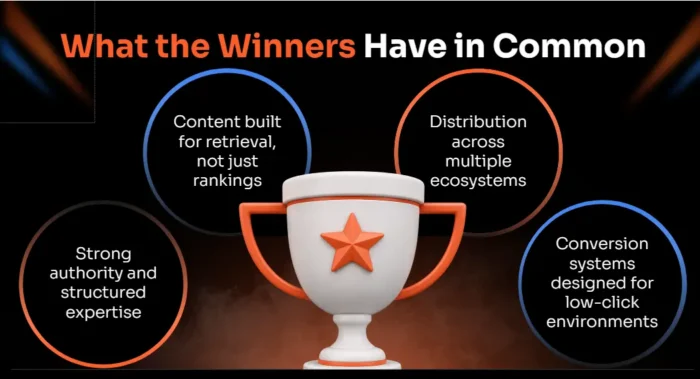
Content Built for Retrieval
The content types that drive both AI citations and conversions are high-intent formats that answer specific questions buyers ask when they’re close to a decision. Not top-of-funnel awareness pieces.
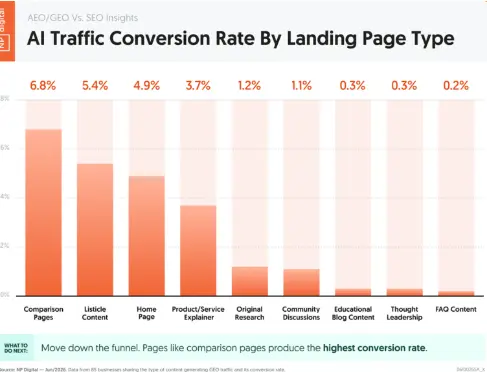
Comparison pages and alternatives content convert AI-referred traffic at 6.8 percent, the highest of any page type NP Digital tracked. First-party research and original data earn citations because they can’t be replicated elsewhere; they become reference points AI engines return to repeatedly. Bottom-funnel educational content and FAQ frameworks round out the top performers.
Format is as important as topic. Lists and listicles account for 48 percent of AI citations in NP Digital’s research. Step-by-step guides come in at 17 percent. AI engines pull from content structured for easy parsing. Content not formatted for retrieval tends not to get retrieved.
Strong Authority Signals
NP Digital scored six trust signals across ChatGPT, Gemini, Copilot, Claude, and Perplexity on a one-to-five scale. Third-party citations scored between 4.5 and 4.8, the single most consistent signal across every platform. Expert authorship scored between 4.0 and 4.6.
AI engines reward signals that are difficult to manufacture: named, credentialed authors; external sources citing your content; consistent brand presence across multiple platforms. Publishing on your own site still matters, but earning coverage and mentions outside it is what drives citations.
Multi-Channel Distribution
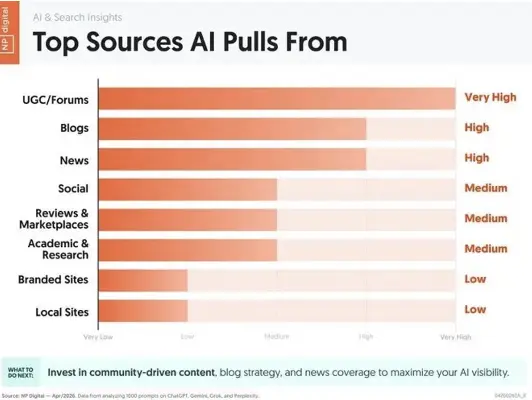
NP Digital tracked 75 brands across AI platforms and found a direct correlation between monthly publishing channels and AI visibility score. AI engines validate authority through repetition and consistency. Presence across YouTube, LinkedIn, Reddit, and PR channels signals to AI tools that your brand is real and relevant, not just self-published.
Conversion Architecture for Low-Click Environments
AI-referred visitors arrive pre-qualified. They’ve already done the research, compared options, and formed an opinion. A landing page designed for someone at the top of the funnel is the wrong tool for a visitor who’s already at the bottom.
The brands capturing revenue from this traffic have built accordingly: fast pages, strong trust indicators placed prominently, simplified calls to action, bottom-funnel calculators and tools, and conversational paths that confirm a decision rather than explain a product category.
How to Measure AEO/GEO for Revenue, Not Just Visibility
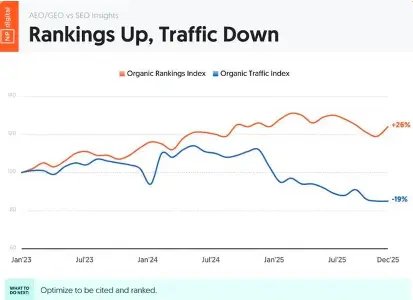
The metrics most teams track are measuring the wrong thing. Rankings, raw traffic, click-through rate, AI mention counts, these are visibility metrics. They tell you whether people are seeing your brand. They don’t tell you whether it’s generating revenue.
The teams getting AEO/GEO budgets renewed are the ones connecting citations to pipeline. That requires a different measurement stack.
Stop tracking: raw rankings, organic traffic volume as a primary metric, click-through rate, AI mention counts, raw citation tracking, vanity impressions.
Start tracking: influenced conversions, brand search lift, assisted pipeline, returning visitor quality, and conversion rate by intent source.
NP Digital’s outcomes-first measurement framework organizes this into three tiers. At the foundation: visibility and influence signals, including brand search volume, share of voice, community engagement, and earned media. In the middle: demand signals, including multi-touch attribution, AI-driven lead scoring, behavioral intent, and consumption depth. At the top: business outcomes, including revenue, CAC:LTV ratio, retention, expansion, and advocacy.
Build reporting from the bottom up. Track from the top down. The goal is a dashboard leadership reads as a business document, not a marketing activity report.
NP Digital research shows how much KPI priorities have shifted. Leadership priority for rankings dropped from 88 to 63 between 2024 and 2026. Pipeline contribution rose from 23 to 70. Revenue growth held steady at 96 to 98. Your measurement framework needs to reflect where leadership attention already sits.
A practical starting point: for every vanity metric on your current dashboard, add one outcome metric alongside it. That shift is often enough to change the budget conversation.
The 90-Day Plan to Turn AEO/GEO Into Revenue
You don’t need to overhaul everything at once. You do need to run the phases in order. Each phase builds on the one before it, and skipping ahead consistently produces weaker results.
Days 1 to 30: Audit and Fix the Foundation
Start by auditing your current AI visibility across ChatGPT, Gemini, Claude, Perplexity, and Google AI Overviews. Search your brand name and core topics. Note where you appear, where competitors appear instead, and where no one appears. Those gaps are your priority list.
From there, identify high-intent content gaps where competitors are getting cited and you aren’t. Improve structured formatting across your highest-traffic pages with clear headers, FAQ sections, and concise direct answers. Strengthen author and entity signals. Clean up trust indicators including reviews, third-party citations, and brand consistency across platforms. Apply schema and retrieval-friendly formatting throughout.
One consistent finding across NP Digital’s audits: brand authority, PR and mentions, and community visibility are almost always the lowest-scored areas. Start there before investing more in content production.
Days 31 to 60: Create and Distribute for Profitability
Create the content types that drive both citations and conversions: comparison pages, original research and proprietary data, buyer guides, and FAQ expansions. These formats earn citations and convert the traffic those citations send.
Distribute across LinkedIn, YouTube, PR placements, expert commentary opportunities, and community channels like Reddit. The goal is consistent presence across multiple ecosystems. AI engines validate authority through repetition across platforms, not just depth on your own site.
Days 61 to 90: Optimize Conversion and Measurement
With the foundation fixed and the content layer built, optimize for what happens when AI-referred visitors arrive.
Improve bottom-funnel UX for high-intent visitors. Add calculators, tools, and simplified calls to action. Optimize assisted conversion flows. On the measurement side, track influenced pipeline from AI-assisted traffic, compare conversion quality across platforms, and build an executive dashboard tied to revenue rather than visibility metrics.
The window to establish AI search presence is real and won’t stay open indefinitely. The brands building this infrastructure now are accumulating authority signals that compound over time and become increasingly difficult for competitors to overcome.
FAQs
How do you connect AEO/GEO to revenue?
The connection runs through your measurement framework and your conversion architecture. On the measurement side, track influenced conversions, assisted pipeline, and brand search lift rather than citation counts. On the conversion side, build landing pages and CTAs designed for visitors who arrive already informed. AI-referred visitors are pre-qualified and need a fast path to a decision, not an introduction to your product category.
What metrics should you track for AEO/GEO profitability?
Move away from rankings, raw traffic, and citation volume as primary KPIs. The metrics that connect to profit are influenced conversions, brand search lift, assisted pipeline, returning visitor quality, and conversion rate by intent source. Build toward a three-tier measurement stack: visibility and influence at the foundation, demand signals in the middle, and business outcomes at the top.
What content converts best from AI-referred traffic?
Comparison pages and alternatives content convert AI-referred traffic at 6.8 percent, the highest of any page type in NP Digital’s research. First-party research, bottom-funnel educational content, and FAQ frameworks also perform well. Format matters as much as topic. Lists and listicles account for 48 percent of AI citations because they’re structured for easy extraction.
Conclusion
The winners in AI search don’t just focus on earning the most citations but make sure they can turn citations into pipeline.
That requires connecting visibility to conversion architecture, measuring outcomes rather than activity, and building the content and authority signals that AI engines reward consistently over time. None of those things happen by accident.
The brands doing this work now are building compounding advantages. Authority signals accumulate. Citation patterns stabilize. Conversion infrastructure improves with data. Starting later means starting behind.
If you want support building an AEO/GEO strategy tied to revenue rather than just visibility, NP Digital’s team works through exactly this kind of profitability infrastructure with clients.
Are You Using Google Ads? Try Our FREE Ads Grader!
Stop wasting money and unlock the hidden potential of your advertising.
- Discover the power of intentional advertising.
- Reach your ideal target audience.
- Maximize ad spend efficiency.