Traffic through the Strait of Hormuz came to a near standstill on Thursday, after the US struck Iran for a second straight day as a fragile truce between the two sides looked increasingly shaky.
Observable movements in the world’s most vital energy conduit largely occurred along an Iran-approved route nearer to the waterway’s north, while the US-supported Omani corridor was quiet, ship-tracking data show.
Among larger vessels, only a US-sanctioned supertanker heading out of the Persian Gulf was seen in the strait, alongside an Iranian-flagged container ship. It’s possible that some vessels may be crossing with their transponders turned off, however.
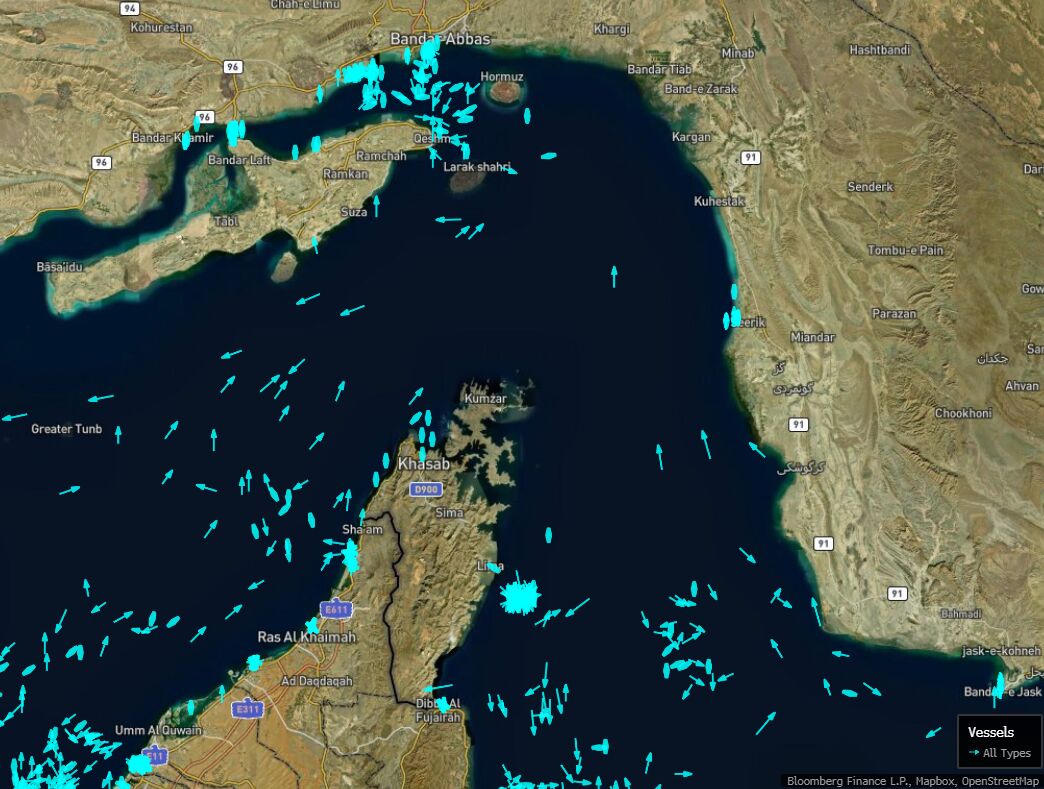
The slowdown comes after a spate of Iranian attacks on vessels that had prompted the US strikes, while President Donald Trump also said the ceasefire with Iran was over. Some 14 commodity carriers crossed the strait in both directions on Wednesday, the least since the interim peace deal in mid-June.
It’s a stark shift from recent daily activity in the strait. In the three weeks since the US and Iran agreed to an interim deal to reopen Hormuz, average daily transits of commodity vessels was at 34, with a peak of 59 on June 24, Kpler data show. That compares with a wartime daily count of less than 20 on most days.
Read More: Some War Insurers Advise Shipowners to Pause Hormuz Voyages After Attacks: Sources
While liquefied natural gas tanker traffic through the strait remained at a standstill, two empty vessels have recently entered the Gulf of Oman and are heading toward the eastern entrance of Hormuz.
There were also signs that sporadic electronic interference was back, with vessels to the southeast of Limah in Oman in the Gulf of Oman appearing to travel at unusually fast speeds of at least 30 knots early on Thursday. That could point to countries activating defense systems aimed at obstructing hostile forces’ drones from attacking their infrastructure, which can affect ships’ transponder signals. Electronic interference may also affect ship-tracking data.
Photograph: Oil tankers and cargo vessels are anchored off the coast of Oman; photo credit: Elke Scholiers/Getty Images
Copyright 2026 Bloomberg.
Topics
USA
The most important insurance news,in your inbox every business day.
Get the insurance industry’s trusted newsletter